In the art world, fame usually arrives hand in hand with publicity. Artists attend exhibitions, give interviews, and pose proudly beside their masterpieces. Banksy, however, appears to have misplaced this instruction manual entirely.
Banksy is perhaps the most famous an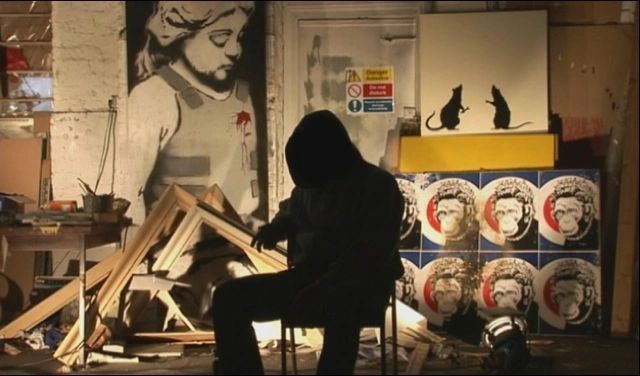 onymous artist in modern history—a title that sounds almost contradictory. Imagine becoming a global celebrity while successfully avoiding photographs, interviews, and even confirmation of your real name. In an age when people share pictures of their breakfast with millions of strangers online, Banksy's commitment to privacy is both remarkable and slightly unbelievable.
Originating from Bristol, England, Banksy transformed street art from an activity often dismissed as vandalism into a respected form of cultural commentary. Armed with spray paint, stencils, and a sharp sense of humor, he turned ordinary walls into public debates. His artworks do not merely decorate urban spaces; they challenge viewers to reconsider politics, consumer culture, social inequality, and the absurdities of modern life.
One of Banksy's greatest strengths is his ability to deliver serious messages through playful imagery. A child reaching for a balloon, a soldier painting peace signs, or a protester throwing flowers instead of weapons—these images are visually simple yet intellectually powerful. They invite viewers to smile first and think second, which is often more effective than forcing them to do the opposite.
Perhaps the most entertaining aspect of Banksy's career is his ongoing relationship with the art market. Although many of his works criticize commercialism and excessive wealth, collectors eagerly spend millions of dollars acquiring them. The irony is almost artistic in itself. It is rather like purchasing an expensive T-shirt that says, “Money isn't everything.”
This contradiction reached its peak in 2018 when Banksy's artwork Girl with Balloon was sold at auction. Moments after the hammer fell, the painting began sliding through a hidden shredder concealed within its frame. The stunned audience watched as the artwork partially destroyed itself. It was one of the most memorable performances in contemporary art history. Even more amusingly, the shredded piece later became more valuable than before. Banksy may have intended to mock the art market, but the art market responded by applauding and increasing the price.
Despite his playful approach, Banksy's work addresses serious issues. His murals often highlight war, poverty, migration, surveillance, and political conflict. Unlike traditional artists whose work may remain inside museums, Banksy places his messages directly in public spaces, where anyone can encounter them. His audience is not limited to critics or collectors; it includes commuters, tourists, students, and occasionally confused pigeons.
The mystery surrounding Banksy's identity has undoubtedly contributed to his fame, yet it is not the reason for his influence. What truly distinguishes him is his ability to combine wit with social criticism. He reminds us that art does not have to be silent, expensive, or locked behind gallery walls. It can appear unexpectedly on a street corner and challenge an entire way of thinking.
In the end, perhaps the most impressive thing about Banksy is that nobody knows exactly who he is, yet almost everyone understands what he is trying to say. In a world overflowing with voices demanding attention, the anonymous artist with a spray can continues to speak the loudest.